Goals students actually own.
Students set their own goals, reflect each week and share progress with their mentor. Teachers see who needs a conversation, and leaders get a progress report each term.
“I finally finished my essay plan before the weekend.”
Example Year 10 Friday reflection
Built for the way a term runs.
Words like Teacher, Student, Reflection and Progress report are set for schools from day one.
Their goals, their words
Goals broken into weekly steps, a two-minute Friday reflection and a private journal, on a phone or a laptop.
Who needs a conversation
Low or missing reflections rise to the top, and mentoring meetings keep their agenda and notes.
A progress report each term
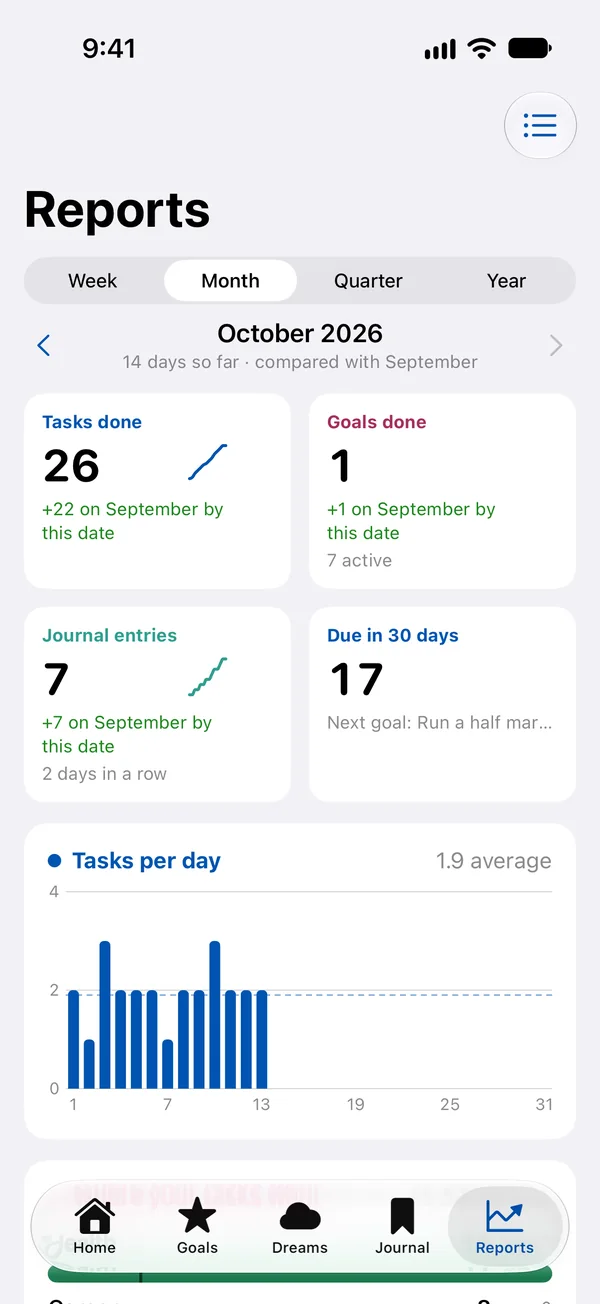
Goal setting and reflection across year groups, ready to download for the principal or the board.
Every goal starts as a good goal.
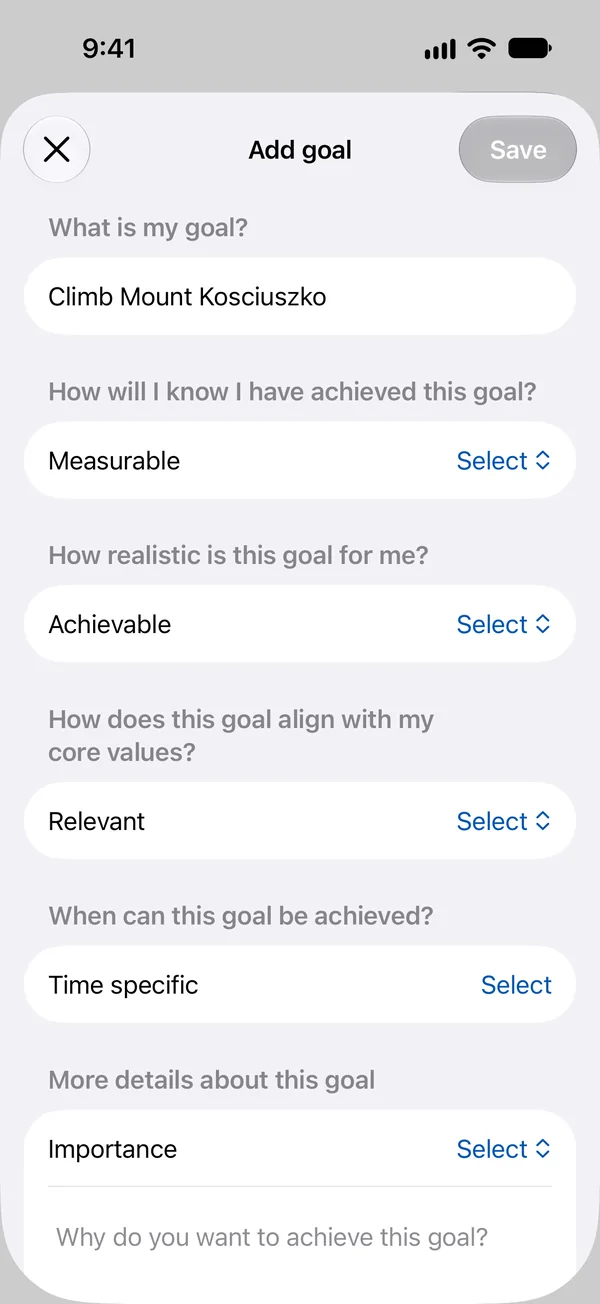
Students learn SMART goals in class. In Lifetick they practise it every time, because adding a goal walks them through each letter as a plain question. Teachers spend less time fixing vague goals and more time talking about progress.
- SWhat is my goal?Specific: one clear thing, in their own words
- MHow will I know I have achieved it?Measurable: a number, a finish line or a yes or no
- AHow realistic is this goal for me?Achievable: a stretch, without setting up to fail
- RHow does it fit what matters to me?Relevant: tied to their values
- TWhen can this goal be achieved?Time specific: a date, then weekly steps to it
Students use the app they already like
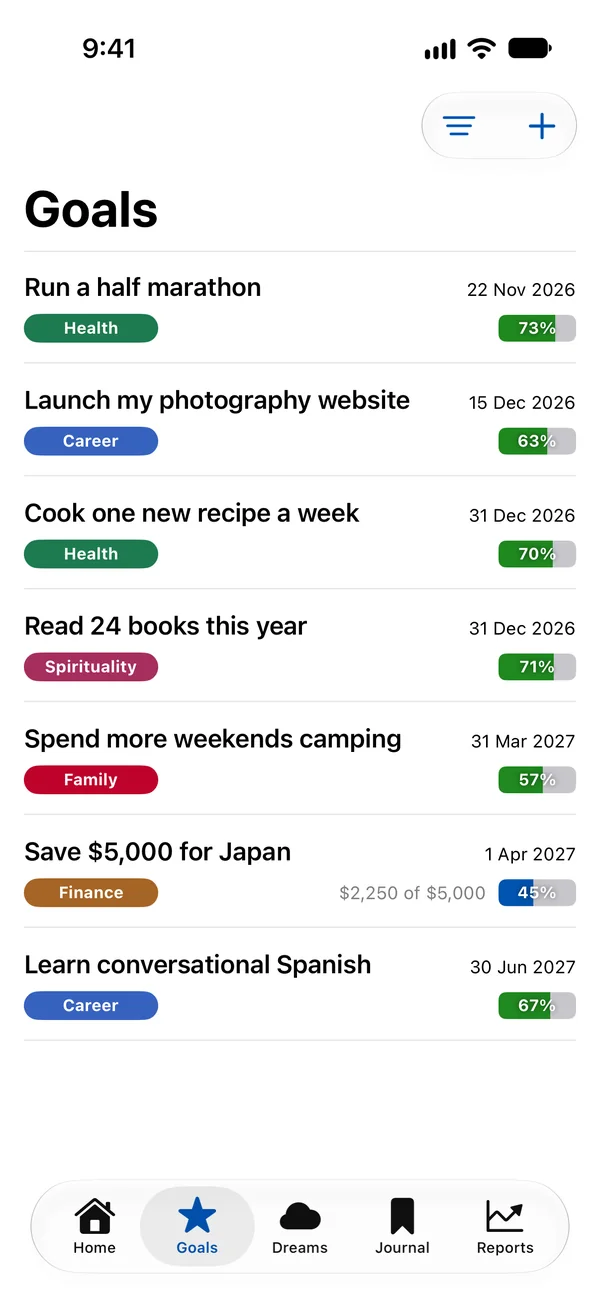
The same Lifetick app individuals use every day, with their mentor added. Students choose what their mentor sees.
- Goals with weekly steps
- A Friday reflection in two minutes
- A private journal, always private
Pilot Lifetick with one year group.
Start with a single mentor group for a term, then decide with real results in hand.